



Days
Hours
Minutes
Seconds
Registration closes
Workshop on

Towards Sustainable Hilsa Fisheries: Challenges, Opportunities, and Future Management Strategies

Registration fee: 200 BDT

Days
Hours
Minutes
Seconds
Registration closes

30 November 2026
Time 09:30 AM (BST)

IQAC Seminar Room,
Noakhali Science & Technology University

Background

Hilsa shad (Tenualosa ilisha Hamilton, 1822), locally known as ‘Ilish’, is Bangladesh’s national fish and a flagship species of immense economic, nutritional, cultural, and social importance. Bangladesh contributes approximately 95% of global hilsa production, supporting millions of livelihoods through fisheries and associated value-chain activities (FAO, 2020; DoF, 2020).

Despite significant research and conservation initiatives, hilsa fisheries face growing challenges, including overfishing, habitat degradation, climate change, governance gaps, and livelihood vulnerabilities. Addressing these interconnected pressures requires an integrated approach encompassing stock sustainability, ecosystem conservation, effective governance, and inclusive livelihoods.

Against this backdrop, the one-day workshop, “Sustainable Hilsa Fisheries Management in Bangladesh,” at Noakhali Science and Technology University (NSTU) aims to facilitate scientific exchange, strengthen stakeholder collaboration, identify research and management priorities, and develop evidence-based recommendations for sustainable, climate-resilient, and socially inclusive hilsa fisheries management.
Key Challenges and Emerging Opportunities

Recent catch fluctuations over the past two years and rising market prices have raised concerns regarding stock sustainability, consumer affordability, and equitable benefit sharing. Sustaining the fishery requires addressing key pressures while leveraging new opportunities:

  • Overexploitation and Illegal Fishing: Harvesting of juvenile hilsa (jatka) and brood fish, IUU fishing, overfishing, and destructive gears.
  • Habitat and Climate Stress: River pollution, siltation, river fragmentation, altered water flows, salinity intrusion, rising water temperatures, and erratic rainfall.
  • Socio-Economic and Governance Gaps: Livelihood shocks for small-scale fishers during seasonal bans, unequal value-chain benefits, and gaps in stock assessment, monitoring, and enforcement.
  • Emerging Opportunities: Strengthening adaptive sanctuary and ban management with updated biological data; applying GIS, remote sensing, AI, and habitat-suitability modeling; and expanding inclusive co-management, value addition, and alternative livelihood support.

Workshop Themes

  • Theme 1 – Sustainable Hilsa Fisheries in India: Assessing hilsa stock status, migratory pathways, riverine habitat dynamics, and environmental stressors across Indian estuaries and coastal waters, while highlighting scientific conservation efforts, policy interventions, and regional lessons for stock recovery.
  • Theme 2 – Sustainable Hilsa Fisheries in Myanmar: Exploring hilsa catch trends, spawning and nursery habitats, transboundary stock connectivity, and national research and development initiatives to support sustainable harvesting and cross-border fisheries governance across the Bay of Bengal.
  • Theme 3 – Sustainable Hilsa Fisheries in Bangladesh: Addressing stock sustainability, jatka and brood fish conservation, adaptive sanctuary and seasonal ban governance, climate-resilient habitat management, small-scale fisher livelihoods, and the integration of Local Ecological Knowledge (LEK) into inclusive, evidence-based management strategies.

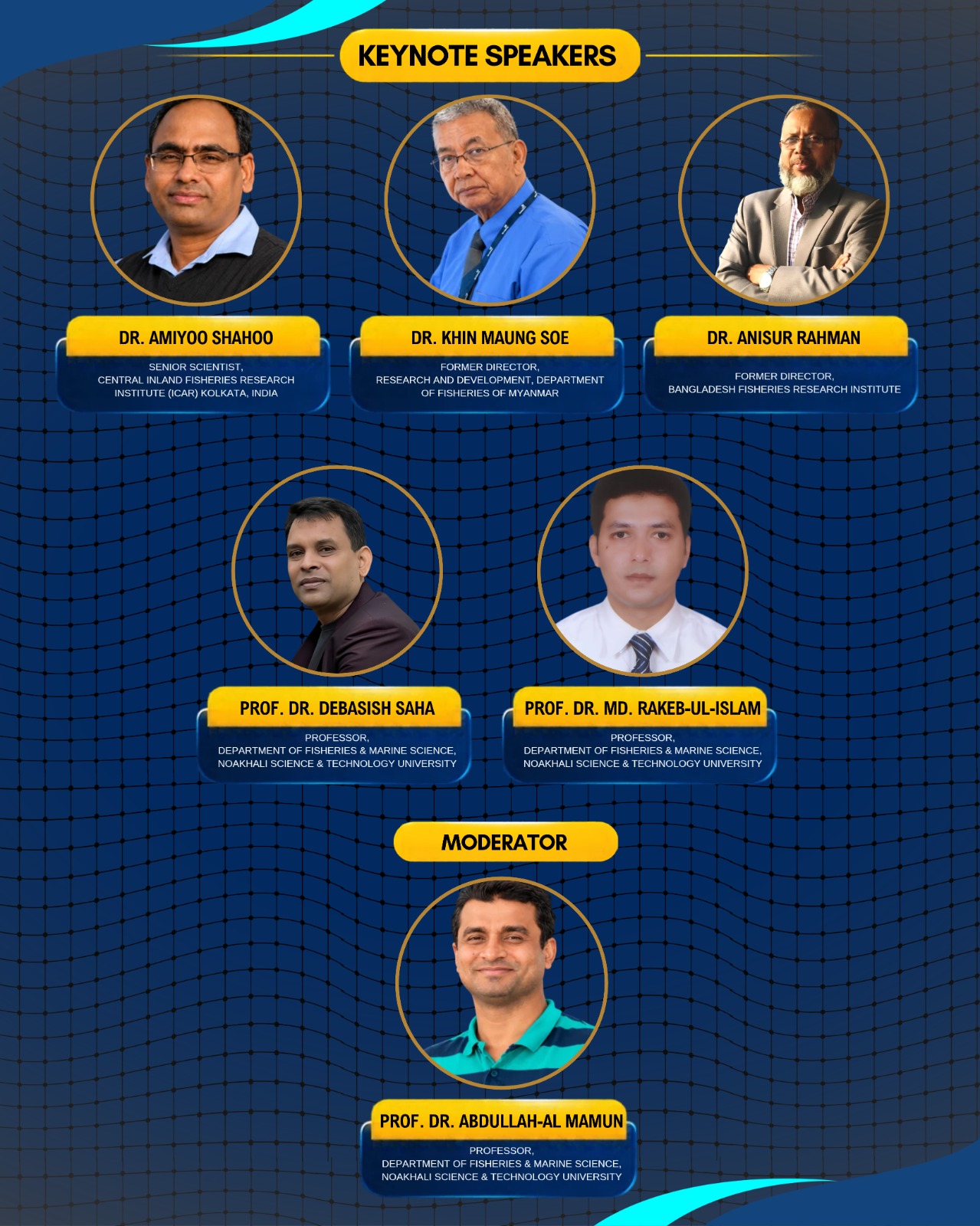
Workshop Dignitaries, Speakers & Key Roles

Tentative Program Schedule (30 November 2026)

Time Session and Key Activities
09:30 AM – 10:00 AM Registration: Participant check-in and workshop kit distribution
10:00 AM – 10:50 AM Opening Ceremony: Welcome address, remarks from guests, and inaugural speech
10:50 AM – 11:05 AM Short Tea Break: Refreshments and networking
11:05 AM – 01:25 PM Technical Session (Regional & National Perspectives) • 11:05 – 11:25: Sustainable Hilsa Fisheries in India • 11:25 – 11:45: Sustainable Hilsa Fisheries in Myanmar • 11:45 – 12:05: Sustainable Hilsa Fisheries in Bangladesh (Talk 1) • 12:05 – 12:25: Sustainable Hilsa Fisheries in Bangladesh (Talk 2) • 12:25 – 12:45: Sustainable Hilsa Fisheries in Bangladesh (Talk 3) • 12:45 – 01:05: Local Ecological Knowledge About the Hilsa Fisheries in Bangladesh • 01:05 – 01:25: Open Q&A, Discussion & Thematic Synthesis
01:25 PM – 02:00 PM Closing Ceremony: Session highlights, concluding remarks, vote of thanks, certificate distribution, and group photo
02:00 PM onwards Lunch & Prayer Break

Participants, Expected Outcomes and Venue Details

Expected Outputs and Outcomes

  • A concise Workshop Action Note outlining priority research and future management strategies.
  • Synthesized thematic recommendations for regional and national policy implementation.
  • An electronic abstract compilation of presented research.
  • Strengthened network and collaboration framework for climate-resilient hilsa governance.

Venue and Organizing Details

  • Location: IQAC Seminar Room, Auditorium Building, Noakhali Science and Technology University (NSTU), Sonapur, Noakhali-3814, Bangladesh
  • Date & Time: 30 November 2026, 09:30 AM onwards