
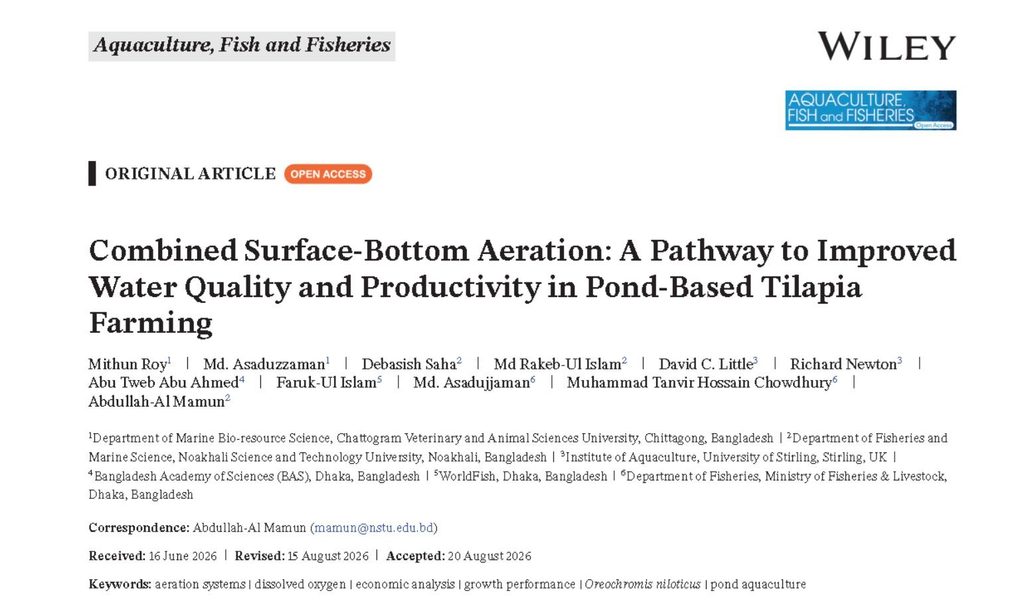
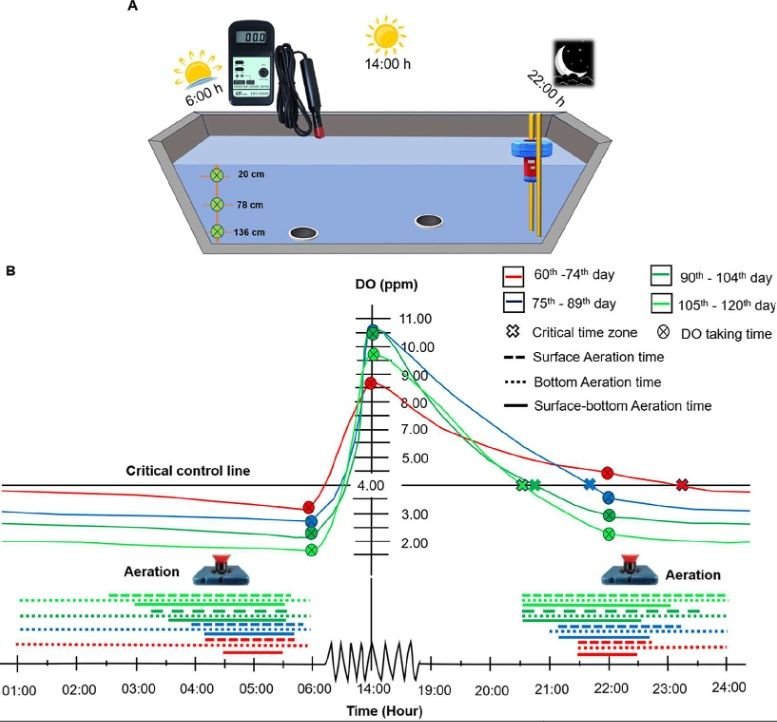
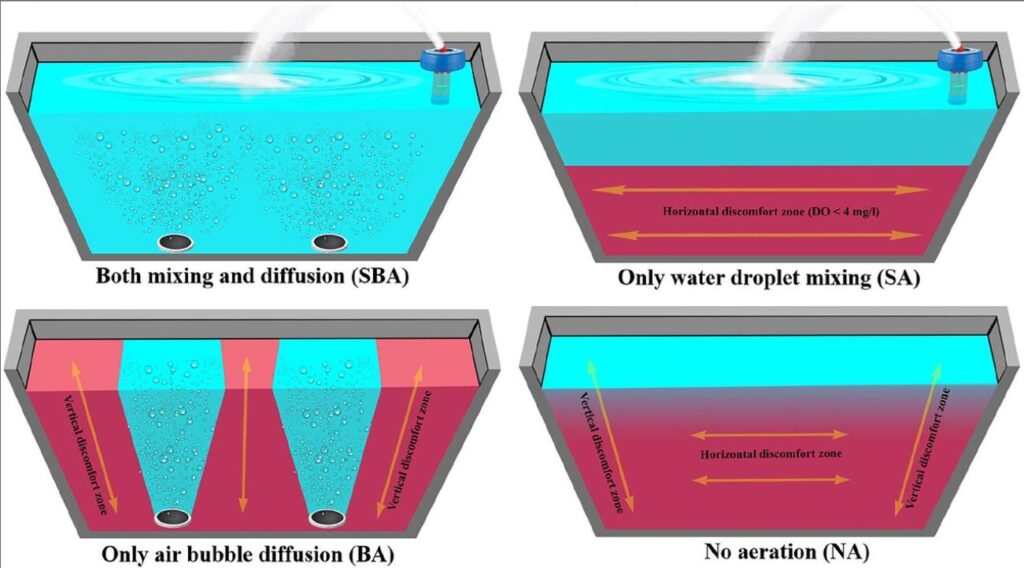
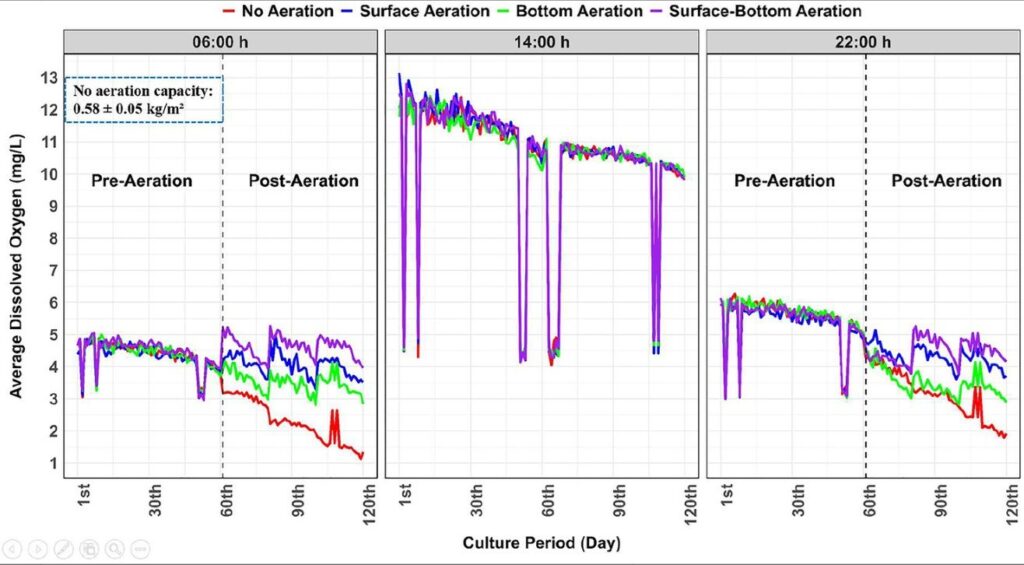
This study investigated how different aeration strategies—surface aeration, bottom aeration, and their combination—affect dissolved oxygen dynamics, water quality, fish growth, feed efficiency, production and economic performance in intensive pond-based Nile tilapia culture.
One of the key findings was that combined surface-bottom aeration (SBA) provided a more balanced oxygen distribution throughout the water column and was associated with improved production and feed utilization.
📈 Key Findings Under the Experimental Conditions
- Production: 16.47 MT/ha
- Survival: 96.88%
- FCR: 1.41
- Benefit–cost ratio: 1.14
- ROI: 13.60%
The study also highlights the importance of adaptive aeration management, particularly as fish biomass increases and oxygen demand rises during the grow-out period.
Contribution to Sustainable Aquaculture
This work contributes to our broader effort to develop mechanized and sustainable approaches for intensifying pond aquaculture, particularly under Bangladesh’s production conditions.
I am sincerely grateful to my supervisors, co-authors, collaborators and institutions for their valuable support throughout this research.
Acknowledgements
Special thanks to Dr. Md. Asaduzzaman, Dr. Debasish Saha, Dr. Md. Rakeb-Ul Islam, Dr. David C. Little, Dr. Richard Newton, Dr. Abu Tweb Abu Ahmed, Dr. Faruk-Ul Islam, Dr. Md. Asadujjaman, Dr. Muhammad Tanvir Hossain Chowdhury, and Prof. Abdullah-Al Mamun for their contributions and guidance.
I am also grateful to the Bangladesh Academy of Sciences (BAS) – USDA Endowment Programme for supporting this research.
🔗 DOI
10.1002/aff2.70322